
This document presents a comprehensive overview of the current state of the art regarding the environmental impact of digital technologies, with a specific focus on assessment methodologies, key standards, and measurement tools. As digital ecosystems continue to grow in complexity and scale, understanding their environmental footprint has become both a scientific and industrial priority. The report is structured to guide readers from the broader context of digital transformation and its environmental implications, through the methodological frameworks used to evaluate impacts, and down to the practical challenges and tools available for conducting life cycle assessments (LCA) of digital services.
This state of the art represents work at a given moment, in a rapidly evolving field, and which is attracting growing interest given the climate crisis, on the one hand, and the awareness of the strong impact of AI technologies in particular, on the other.


« In an environment in constant evolution, assessing the environmental impact of a digital service or an entire IT infrastructure can prove to be complex. How can IT asset management solutions be integrated with LCA tools? These are the main challenges we aim to address. »

« Measuring the environmental impact of cybersecurity activities is a challenge, particularly in the context of a multicriteria approach that aligns with the principles of life cycle assessment. Using cloud services introduces further complications. The accuracy of data sources can be questionable due to the presence of imprecision, incompleteness, and missing data. This state-of-the-art presentation offers an initial exploration of the main applicable metrics, methodologies, and standards to this end. »

« New emerging AI technologies are used at all levels of society on a daily basis. Finding the right balance between a responsible AI model and the benefits of AI outcomes becomes a key factor. The field is in constant evolution and monitoring it effectively is essential. »
Page
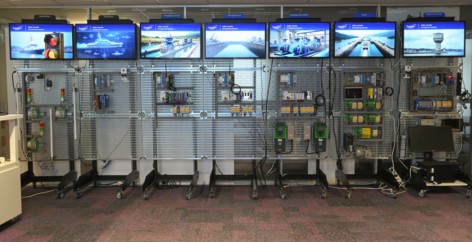
In just a few months, IRT SystemX can help you validate your technology choices, leveraging its experts and state-of-the-art technological platforms. Our goal to support industrial stakeholders in the rapid evaluation of innovative technologies by applying them to a specific use case. Duration 3 to 6 months – a short, agile, and results-oriented format. Expected…

Page
The Cybelia programme answers the resilience needs of industry to face the intensification and sophistication of cyber-attacks.
Page