
Published on 03/16/2026
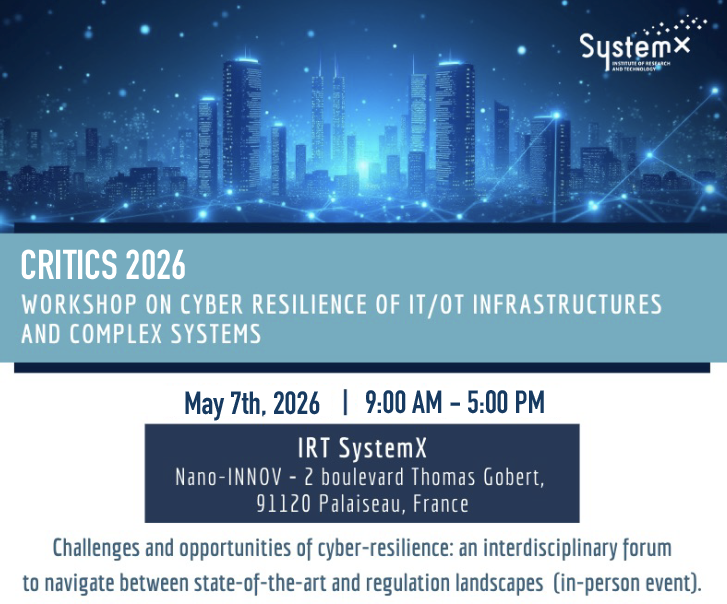
Part 1
09:00am – 09:15am | Welcome coffee
09:15am – 09:25am | Introduction, Organizers
09:25am – 09:40am | IRT SystemX Cybersecurity Activities Overview, Reda Yaich (Head of Cybersecurity, IRT SystemX) and Romain Dagnas (Research-engineer, IRT SystemX)
09:40am – 10:25am | [Opening Keynote], Vincent Naessens (Full professor KU Leuven)
10:25am – 10:45am | Coffee break
10:45am – 11:45am | [Techno Highlight] Zero-level Monitoring for Resilience Enhancement, Frédéric Breussin (President of AIoTrust)
11:45am – 12:45am | [Techno Demo] Cyber Attacks Impact on Industrial Systems and Cyber Countermeasures, Cybersecurity team (IRT SystemX)
Part 2
12:45am – 13:45pm | Lunch break
13:45pm – 14:00pm | RSTN Center Cybersecurity activities overview, Joaquin Garcia-Alfaro(Professor, Institut Polytechnique de Paris, Télécom SudParis)
14:00pm – 14:45pm | RSTN / LINCS – Seminar Michel Barbeau – Quantum Sensing on the Horizon: Opportunities and impact, Michel Barbeau (Professor, School of Computer Science, Carleton University, Ottawa, Canada)
14:45pm – 15:30pm | [Testimony] Maritime cybersecurity, Yvon Kermarrec (Professor, IMT Atlantique)
15:30pm – 15:50pm | Coffee break
15:50pm – 16:50pm | [Panel RSTN] Maritime cybersecurity and resilience, Filippo Campagnaro (Member, IEEE OES and Comsoc) and Stéphane Blouin (IEEE Senior Member)
16:50pm – 17:00pm | [Concluding remarks] Farwell, Michel Barbeau (Professor, School of Computer Science, Carleton University, Ottawa, Canada), Joaquin Garcia-Alfaro (Professor, Institut Polytechnique de Paris, Télécom SudParis), Reda Yaich (Head of Cybersecurity, IRT SystemX) and Romain Dagnas (Research-engineer, IRT SystemX)
Filippo Campagnaro (Member, IEEE OES and Comsoc).
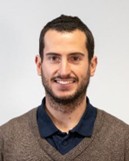
Filippo Campagnaro received the Ph.D. degree in information engineering in 2019 from the University of Padova, Padova, Italy.
In 2014, he joined the SIGNET Group, Department of Information Engineering, University of Padova, as a Research Engineer. In October 2019, he joined the Department of Information Engineering, University of Padova, as a Postdoctoral Researcher and Lecturer of ICT master courses. He is currently a Research Assistant Professor with the same department and co-founder of SubSeaPulse SRL, a startup company developing innovative solutions for underwater communications and wireless sensors for studying biodiversity and climate change in coastal areas.
His research activity involves the design and evaluation of secure multimodal underwater optical and acoustic networks, with a particular focus on simulation and field experimentation. Filippo has developed several research and industrial prototypes and has participated in over 20 sea trials with NATO STO CMRE (La Spezia, Italy), EvoLogics GmbH (Berlin, Germany), the IMDEA Network Institute (Madrid, Spain), the University of Haifa (Haifa, Israel), and the CSSN of the Italian Navy (La Spezia, Italy). He was one of the technical managers of the MarTERA RoboVaaS project and collaborated with the European Defence Agency project SALSA.
Dr. Stéphane Blouin (IEEE Senior Member, P.Eng.)

Stéphane Blouin is a professional and multi-disciplinary engineer who in his early career accumulated 13 years of industrial R&D experience (Canada, France, USA) in the automotive, pharmaceutical, safety, industrial gases, petrochemical and food sectors. In 2010, he joined Defence R&D Canda (DRDC), a role in which he focused on underwater sensing and communication, sensor networks, intelligent autonomous systems, and experimental validation. He actively collaborates with NATO groups and researchers and is the recipient of many awards (NATO, IEEE, etc.).
Dr. Blouin’s interests include dynamic modeling, real-time monitoring, control, adaptation and estimation, dynamic modelling, optimization and experimental research applied to autonomous and intelligent systems. His research led to patented technologies, commercialization of automated solutions, and nearly 100 peer-reviewed and public-domain scientific documents (Google Scholar Stephane Blouin – Google Scholar). On July 1st 2026, Dr. Blouin will become an Associate Professor and join the Department of Electrical Engineering at École de Technologie Supérieure (ÉTS) in downtown Montreal (Canada). In his new functions, Dr. Blouin will extend his research in novel adaptation, estimation, control and optimization aspects of networked collaborative autonomous systems operating in adversarial environments.
Vincent Naessens (full Professor, KU Leuven)
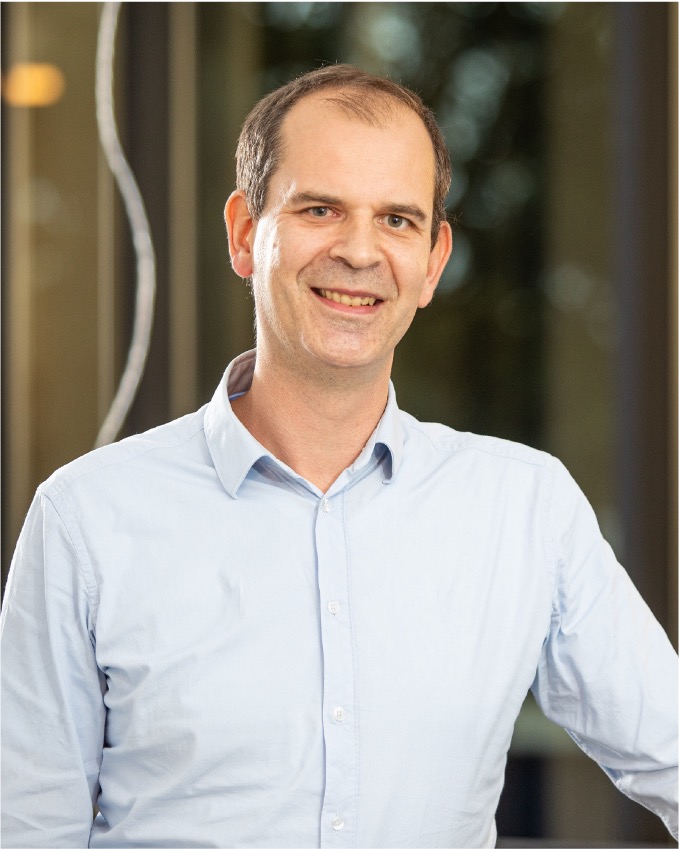 Vincent Naessens is full professor at the Department of Computer Science of KU Leuven and member of the research group DistriNet. The research group studies building blocks, technologies and methodologies for next-generation security infrastructure and secure software systems. Vincent Naessens is mainly active in strategic basic research activities within the domain of cybersecurity thereby frequently setting up close research collaborations with industrial stakeholders. The challenges of many companies largely stem from legislative obligations today.
Yvon Kermarrec (Professor, IMT Atlantique)
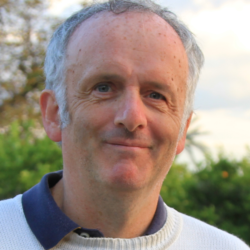 Yvon Kermarrec is Professor of Computer Science at IMT Atlantique and was a member of the IMT Atlantique Management Committee as Head of Department. He holds a PhD in computer science and a “habilitation à diriger les recherches”. His research and teaching activities focus on distributed systems, security, software engineering and software reliability. He was a researcher at the Courant Institute at New York University (NYU), and a software architect with Raytheon (Vancouver, BC) before joining Telecom ParisTech and then Télécom Bretagne as a teacher-researcher.
Frederic Breussin (President of AIoTrust)

Frederic Breussin started his carrer as a combustion engineer. He then moved to a strategy consulting company where he advised companies in their innovations related to sensors.
In 2023, he founded AIotrust, to tackle the issue of cyber resilience of OT infrastructure.
Romain Dagnas (Research-engineer and PhD student, Palaiseau, IRT SystemX)
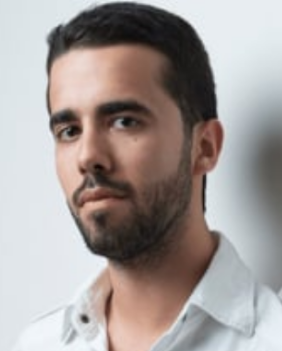 Romain Dagnas received the License degree in mathematics, computer sciences, and physical sciences from the Faculté des Sciences et Techniques de Limoges, France, in 2017, the master diploma degree in computer sciences from 3iL Ingénieurs, France, in 2019, and the master diploma degree in mathematics, cryptology, application coding from CRYPTIS, Faculté des Sciences et Techniques de Limoges, France, in 2019. He is currently a Research-Engineer of the Network and Cybersecurity team at the Technological Research Institute (IRT) SystemX, Palaiseau, France. He works on the Cybelia Programme which answers the resilience needs of industry to face the intensification and sophistication of cyber-attacks, and he is the holder of an exploratory research project launched by SystemX on quantifying the resilience of critical infrastructures.
Michel Barbeau (Professor, School of Computer Science, Carleton University, Ottawa, Canada)
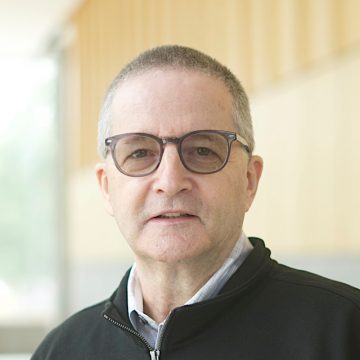 Michel Barbeau is a professor of Computer Science. He got a Ph.D. in Computer Science (Université de Montréal, Canada, Canada’91. From ’91 to ’99, he was a professor at Université de Sherbrooke. During the ’98-’99 academic year, he was a visiting researcher at the University of Aizu, Japan. Since 2000, he has worked at Carleton University, School of Computer Science, Canada. Michel Barbeau primary area of expertise is computer networks, specifically architecture and protocols. Research interests include quantum computing, underwater communications and networks, drones, quantum algorithms, and network control systems. Michel Barbeau has numerous publications in the field of AI and quantum computing. He has contributed to solving problems by leveraging knowledge graph representations, graph analytics, and machine learning. He has demonstrated that the fusion of robotics and quantum computing enables optimization-based approaches. Michel Barbeau is a member of the NATO Science & Technology Organization (STO) Exploratory Team TSI‑ET‑008: Enabling NATO Resilience Through Quantum‑Secure Technologies and a member of the QuARC (Quantum Advancement Research Centre) at Carleton University.
Joaquin Garcia-Alfaro (Professor, Institut Polytechnique de Paris, Télécom SudParis, Palaiseau, France)
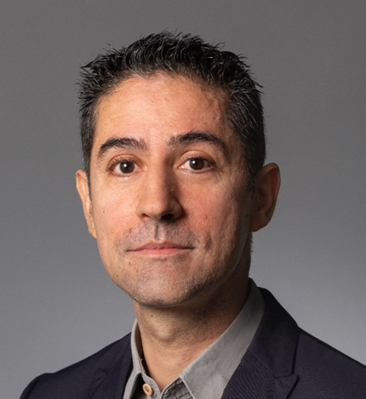 Joaquin Garcia-Alfaro is Professor at Télécom SudParis, head of the SCN (Sécurité and Confiance Numèrique) team of the SAMOVAR laboratory of Institut Polytechnique de Paris, research axis leader at the RSTN center of Institut Mines-Télécom, Adjunct Research Professor and member of the QuARC (Quantum Advancement Research Centre) at Carleton University. His research interests include a wide range of information security problems, with an emphasis on the management of security policies, analysis of vulnerabilities, and enforcement of countermeasures. He holds a double Ph.D. diploma in Computer Science from the Autonomous University of Barcelona and the University of Rennes, and a research Habilitation from Université Sorbonne VI (Pierre et Marie Curie). He is involved in several research projects at National and European levels, related to cybersecurity.
Reda Yaich (Senior researcher, lead cybersecurity and networks team, IRT SystemX)
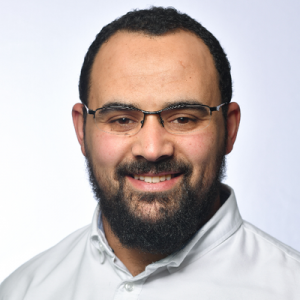 Reda Yaich is a senior researcher and Cyberseurity Team Leader at IRT SystemX. Reda holds as Phd in Computer Science from the ENS Mines of Saint-Etienne with a focus on Trust Management using Artificial Intelligence technologies. He served as lecturer and/or research assistant in several universities (e.g. University of Saint-Etienne, University of Lyon) and engineering schools (ENS Mines Saint-Etienne, Telecom Bretagne, IMT Atlantique, ENSIBS, Telecom SudParis). Reda has several publications in journals and conferences related to Decentralised Access authorisation and Digital Trust Management. He has also participated in numerous national (e.g. ANR FAROS, PIA IDOLE, Web Intelligence, WinPIC, etc.) and European projects (e.g. H2020 SeCoIIA, H2020 SUPERCLOUD, COST Action AT).
IRT SystemX
Centre d’intégration Nano-INNOV
2, boulevard Thomas Gobert
91120 Palaiseau – France
To visit our site, please bring an ID card.
Events
23 January 2025
Jean-Michel Loubes (Inria) ran a Seminar@SystemX on the topic: "Les biais en IA : détecter la déloyauté d'un algorithme par des mesures locales", on January 23, 2025, from 2:00pm to 3:00 pm. Resume Détecter les biais des algorithmes d'IA est devenu une nécessité depuis l'adoption de la loi européenne sur l'IA. En particulier, les plateformes…

Events
20 September 2023
Découvrez les résultats des projets avec l'ensemble des partenaires du programme IA2 (Intelligence Artificielle et Ingénierie Augmentée). Programme 13h30 - 14h : accueil café 14h - 14h20 : présentation générale IA2 Marc Schoenauer et Mouadh Yagoubi 14h20 - 15h50 : présentation des travaux de thèses du programme IA2 Emmanuel Menier "Deep Learning for Reduced Order…
Events
19 September 2024
Pierre Colombo (CentraleSupélec - Equall.ai) ran a Seminar@SystemX on the topic "Advancing Domain-Specific Large Language Models", on September 19, 2024. Resume Large Language Models (LLMs) have revolutionized natural language processing, demonstrating remarkable versatility across various tasks. However, task and domain specialization is crucial to maximize their potential and achieve higher accuracy and relevance in specific…