Published on 10/12/2026
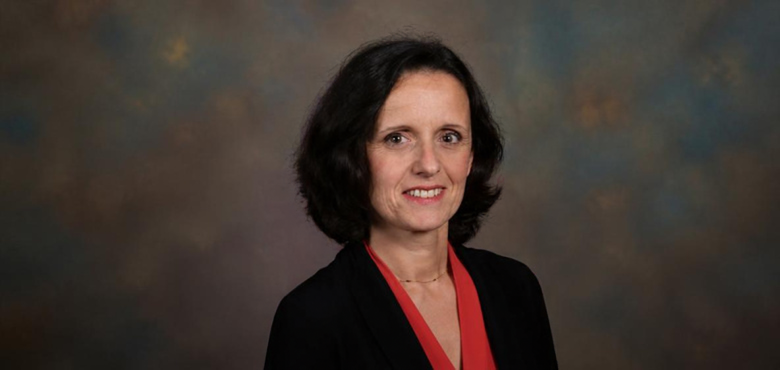
Pascale Vicat Blanc, a research director at INRIA who was recently appointed chair of the institute’s Scientific and Technological Council, is convinced of the vital role played by IRTs in forging close links between academic research and industry, by accelerating the development of concepts and tools emerging from laboratories and by helping industrialists to adopt them and commercialise their technologies. A member of SystemX’s Scientific and Technological Council since 2022, she particularly emphasises the added value provided by the IRT in addressing critical industrial challenges such as modelling and simulation, artificial intelligence, the coupling of the digital and physical worlds, and cybersecurity.
Pascale Vicat Blanc’s key priorities include, alongside the other Council members, supporting the IRT in its scientific choices and direction, whilst also ensuring the coherence and clarity of its scientific work in order to increase its impact and visibility.
I have been closely following the activities of IRT SystemX and have observed the quality and value of its work and achievements for the past ten years or so. As a member of the Scientific Council since 2022, I am also aware of the challenges it has faced. My professional experience in public research, as well as in setting up start-ups and working in the high-tech sector in the US, has convinced me of the importance of forging closer links between the worlds of academic research and industry in France, particularly in the digital sector. Above all, this involves instilling more scientific thinking, methods and results within companies. Conversely, industry must bring forward concrete, challenging and inspiring problems capable of fuelling researchers’ thinking and work. The IRTs were created to stimulate these exchanges, accelerate the development of concepts and tools from the laboratories, and help businesses formalise problems and then take ownership of the ideas tested in the laboratory. I see many challenges ahead and I am delighted to be able to contribute directly to fostering this ecosystem in a scientific field with which I am very familiar.
I will ensure that, together with my academic and industry colleagues on the scientific advisory board, we can assist the IRT teams in making the scientific choices and setting the direction for their work to address the highly complex and important themes of IRT SystemX. Indeed, IRT SystemX focuses on the challenges posed by complex industrial systems, which raise fundamental and critical issues in areas such as modelling and simulation, artificial intelligence, numerical coupling with the physical world, and cybersecurity, amongst others. I therefore hope that we can provide constructive and inspiring feedback on the direction of research and development.
I will also work closely with the scientific management team to ensure the coherence and clarity of the institute’s scientific and technical work, both to stimulate internal strengths and to enhance external visibility.
At Inria, our mission is to work at an early stage on problems considered difficult. We therefore develop concepts and methodologies that generally have a low TRL. The IRT’s mission is to pursue the promising avenues explored by researchers, applying them to real-world scenarios by developing and testing technologically risk-mitigated solutions before industry takes them on to validate them in the market. In the field of AI applications in complex systems, the projects are enormous. It is important that the IRT is able to understand the key challenges our Inria teams are seeking to tackle, and conversely, to identify and articulate the difficulties and bottlenecks encountered by industry.
The IRT acts as an excellent conduit for encouraging industry to work more closely with research laboratories and the research community, and to recruit more PhD graduates.
Indeed, industry is heavily involved in the IRT, not least through its financial contribution, but also within the CST, by participating in the development of roadmaps. We must build on these strengths.

News
The SAM consortium (Sécurité & Acceptabilité de la Mobilité autonome – Security & Acceptability of autonomous Mobility), gathered around the PFA autonomous platform, and selected in 2019 by the government to lead a national experimental programme around the autonomous vehicle, completed four years of work by bringing together, on 28 and 29 November 2023, at the Séquoia…
News
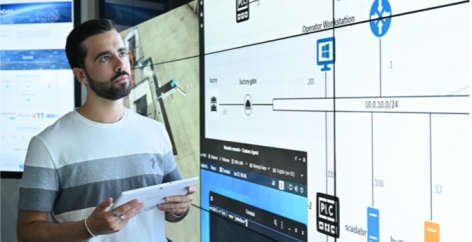
In an era where cybersecurity is at the heart of industrial challenges, IRT SystemX stands out with a unique and innovative approach. Through our R&D efforts, we have not only made our mark at the national and European levels, but we have also generated tangible impacts on the activities of our industrial partners. >>…
News
IRT SystemX gave the floor to Rim Kaddah to talk about her job, the researcher who inspires her the most, and to share her advice for those who are hesitant to pursue careers in science and engineering. Discover more inspiring profiles of our women engineers and researchers in video: Afef Awadid, advanced research engineer: Kahina…