As organisations increase their reliance on digital technologies for cyber threats while pursuing ambitious sustainability goals, they face a growing challenge: how can cybersecurity remain effective while reducing its environmental footprint?
As organisations accelerate their digital transformation, pursue sustainability objectives and adapt to an increasingly uncertain and complex environment, strengthening the resilience of digital infrastructures has become a critical challenge.
Data centres, cloud environments and operational technologies are increasingly exposed to risks such as power shortages, extreme weather events and cooling system failures. These factors can compromise service continuity and create new cybersecurity vulnerabilities.
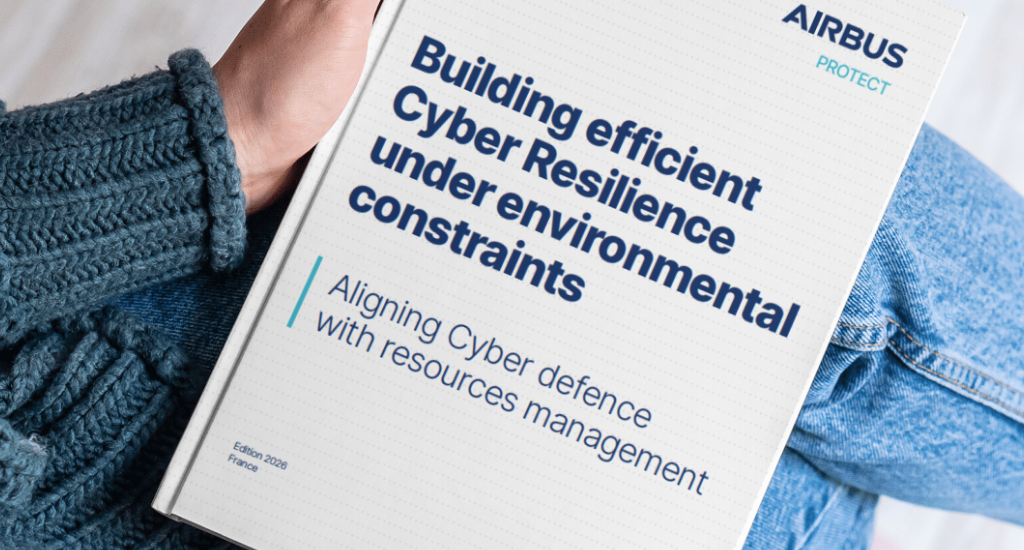
To address these challenges, Airbus Protect and IRT SystemX joined forces to explore how Security Operations Centres (SOCs) can become compliant with regulations, equally resilient and more resource-efficient.
Their joint study introduces the concept of frugal cybersecurity: an approach that optimises resource consumption without compromising security performance or operational visibility.
The study proposes a structured methodology based on Life Cycle Assessment (LCA) principles applied to cybersecurity operations.
The approach combines operational analysis, environmental impact measurement and optimisation strategies to help organisations better understand the hidden costs of their security infrastructure.
This white paper provides practical insights and actionable recommendations for organisations seeking to align cybersecurity resilience with sustainability objectives.


Page
The SystemX Institute for Technological Research stands out as a major accelerator of the digital transformation of industry, services, and territories. Drawing on its unique expertise in systems digital engineering, IRT SystemX supports public and private stakeholders in deploying key technologies to build more efficient, safer, and more sustainable systems.

Page
Firmly driven by a market pull approach, our initiatives address concrete market needs by bringing together multilateral consortia around key industry challenges. This unique dynamic enables the pooling of investments, the capitalization on shared feedback, and the development of common technological building blocks across strategic focus areas such as: Trustworthy Artificial Intelligence, Augmented Engineering for…

Page
For the past 10 years, IRT SystemX has been leading multi-partner, cross-sector R&D projects to promote the large-scale adoption of responsible AI in industry.